Advocacy is for All of Us!
December 17, 2025

December 17, 2025
By Lauren Paz Soldan
As professional educators, all of us have the credentials to be advocates, and we need to be—not only for our students and content area, but for equitable education funding, fair working conditions, and other education policies that support both students and our classroom colleagues. While the idea of advocacy in some public way can seem intimidating, I’d like to try to demystify it and offer some concrete steps to consider, no matter what stage you’ve reached in your career.
Most of my teaching career has been spent in states where collective bargaining was not just the law, but an accepted and praised part of the process each year. So when I moved to Virginia, my home state, I was shocked to find that collective bargaining for public employees was just getting started. I’d always been involved in my local NEA chapters in California and Colorado and was equally surprised to find that many of my colleagues were not members of our local union, or educated about what we can accomplish together through our locals and state organization.
So when the chance to approve collective bargaining was in front of the Fairfax County School Board, I signed up to speak in support of our agreement. At first I was nervous about speaking in front of such a large crowd, but I knew that my experience with collectively bargained contracts was important to add to the conversation. Drawing on my own experiences, I stressed that teachers are the most impactful factor in student success and deserve a seat at the decision-making table. I highlighted the urgent teacher shortage and the burnout educators are facing, stressing that passing the resolution would show respect for teachers’ expertise and signal that Fairfax County Public Schools values and listens to its educators. Leaving the meeting that evening, I felt empowered; I was a part of the process to secure a better contract for my colleagues and further union strength in the Commonwealth.
Too many decisions about schools are made by outsiders. Education policy is unique in that many think that their own past experience as students is enough to qualify them to influence classrooms today. As educators, we are the professionals, the most important factor in student achievement. So many issues need our advocacy – supporting equity, promoting student voice, protesting funding gaps that cut essential programs, and keeping culturally relevant and historically accurate curricula in our classrooms, to name but a few. We need to raise our voices and keep them loud when it comes to teacher compensation as well, in order to recruit and retain the best and the brightest during this pronounced teacher shortage – teacher working conditions are student learning conditions, and our students deserve top-quality educators, schools, and resources.
Even when it’s hard or intimidating, we need more educators to raise their hand. During the 2019 school year, I worked with my local NEA leadership in California to form the Social and Economic Justice Committee. My co-chair and I worked with state leadership to organize multiple cohorts to be trained in unconscious bias, examining how our identities influence our interactions at school. We also curated a library of social justice and anti-racist texts to loan to educators across the district, and created a webpage full of resources for staff, families, and students. We saw a need, and our local helped us step up. This year, I raised my hand again; when a secondary opening for the Virginia Board of Education’s Advisory Board on Teacher Education and Licensure was mentioned in a Virginia Department of Education email, I applied thinking, “Why not me?” I was appointed and will be serving for the next three years.
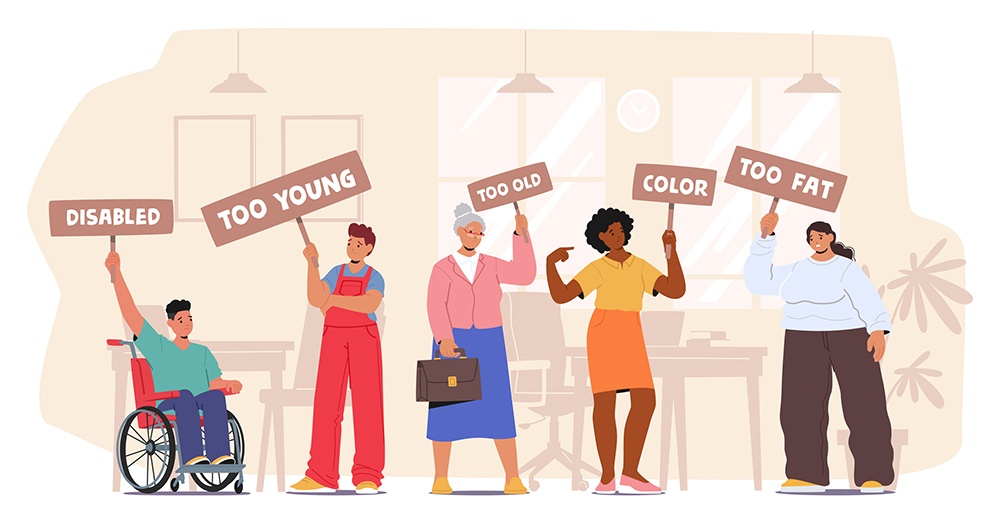
Advocacy comes in all shapes and sizes, from classroom-level conversations to state-level testimony. The voices and stories we teach our students matter, and refusing to overlook marginalized communities in our classrooms advocates for their rights as the next generation of Americans. Show up at your PTSA, they love having teachers share their perspective. Follow your local school board and sign up to speak on issues you feel passionate about. Apply for your school board’s committees – your voice is needed for local policymaking. If you’re ready for even more, statewide boards need representatives as well. Go to Lobby Day with VEA, or if Richmond is a hike, then take those talking points to your state reps at their local offices. You can call and leave a message, or make an appointment for a quick in person conversation. Same goes for your U.S. Representatives and Senators—they serve us, so tell them what you need!
If you’re thinking, “I’m not sure how to start” or “I’m not political,” it’s important to remember that all teaching is political—and there are thousands of people making public education political every day who have no business influencing our schools. You are on the frontlines working with kids every day, you know what our schools and students need – you are the best person to speak up!
Now for some action steps. If you’re not sure where to start, I would suggest starting by joining and getting involved in your VEA local. Join a committee to get your bearings, then run for leadership – your local is a fount of experience and knowledge, and VEA has so many leadership development opportunities, it’s an amazing way to gain advocacy experience in a supportive space. Keep an eye on your local school board, and sign up to speak, either to support or oppose new policies. Look for content specific organizations, like ACTFL (for world language) or NCTM (for math) – they often have great professional development and opportunities to provide feedback or present your own work, which is advocating for best practices.
Advocacy is part of the profession—and we’re stronger together. If you don’t speak up, think of who will. Get your voice in the room!
Lauren Paz Soldan, a member of the Fairfax Education Association, teaches Spanish at Annandale High School. She is the 2025 recipient of the David Cox Award for Excellence in World Language Teaching, presented by the Foreign Language Association of Virginia and a recently appointed member of Virginia’s Advisory Board for Teacher Education and Licensure.
By Ivis Castillo
For too long, Education Support Professionals (ESPs) in Virginia have been the invisible backbone of our public schools—seen but not heard, essential but not respected. As a school bus driver, I’ve experienced firsthand the discrimination and dismissal that often comes with our roles. I’ve had to prove my worth, intelligence, and dedication just to have my voice considered. And I know I’m not alone.
Across Virginia, ESP’s such as bus drivers, attendants, custodians, food service workers, instructional aides, and more are the first to greet students in the morning and the last to see them home safely. We feed them, support them, clean their classrooms, and help them learn. We are educators too, and we deserve to be treated as such.
That’s why I’ve spent the last five years organizing, advocating, and fighting alongside incredible colleagues. Just last year we won our first collective bargaining agreement in Arlington in over 42 years. This contract wasn’t just a win for us—it was a blueprint for how to build a contract that respects every department and every role. It was a declaration that ESPs matter.
The ESP Bill of Rights also passed at the Virginia Representative Assembly, and we are proud to now officially endorse it. This bill outlines the fundamental rights every support professional deserves: fair wages, safe working conditions, professional respect, and a seat at the table where decisions are made.
As Chair of both the National Transportation Caucus and the Virginia ESP Committee, I work hard to ensure that transportation educators and support professionals across the state and country have representation and a voice. Locally, I collaborate with our school board to ensure that every policy change considers the impact on support staff. Because when we advocate for ourselves, we are also advocating for our students. Their well-being is at the heart of everything we do.
It’s time for Virginia lawmakers to recognize the value of Education Support Professionals, not just in words but in legislation. We need policies that protect our rights, respect our work, and invest in our future.
We are not “just” bus drivers or cafeteria workers. We are educators. We are professionals. And we are essential.
Let’s be loud. Let’s be visible. Let’s be heard.
Ivis Castillo, a member of the Arlington Education Association is a school bus driver and Chair of the National Transportation Caucus as well Virginia ESP Committee.
I tell people all the time that when we signed up to work in public schools, we signed up to be politically active and engaged. We have to be political, plain and simple. It’s the only way we can make real changes. When I say political, I don’t mean red vs. blue, I’m saying you must advocate for you—for us, for students and working families.
I think we can all agree that ESPs, like other educators, deserve more funding, resources, and opportunities so that we can give our best to students and so that students can do their best in life. I’m glad to hear that more places across the country are realizing this. They are starting statewide campaigns, like the NEA ESP Bill of Rights, and engaging educators, students, parents, community allies, and elected leaders to push for fair pay, good benefits, better working conditions, and respect for all ESPs. It’s a powerful movement that everyone [in the union] can join right now. Pledge your support for the ESP Bill of Rights by going to the NEA website…It’s a challenging time for public education, but challenging times give us an opportunity and a reason to grow as union members, as educators, as caregivers, as neighbors, and as leaders. In Utah, I have seen people throughout the community step up to defend unions and fight for our rights. It takes all of us—every member of our union—to make big changes. We can’t wait around and expect someone else to come and save us. We are the ones who must come together to save us.
The fight is never over—we can and we must continue to protect our public schools. We won’t stop until all of us get the pay, benefits, working conditions, and respect that we rightfully deserve.
Because when we fight…we win!
Excerpts from Andy Markus, Education Support Professional of the Year at the 104th Representative Assembly in Portland, Oregon in July 2025. To read his full comments, or watch a video of his speech, visit: https://vea.link/AndyMarkus-remarks
Teacher shortages are a serious issue across the country. Here in Virginia, there are currently over 3,648 unfilled teaching positions. (FY23)
Learn More